A few years ago, a student at an international seminar heard one speaker call himself “Evangelical” and another “Protestant.” At first, the student thought they were the same.
Later, he realized the two terms are related but different.
Many people get confused between evangelical and protestant. Both are part of Christianity, but they have distinct meanings.
Knowing the difference helps you understand faith, beliefs, and traditions more clearly.
Key Difference Between the Both
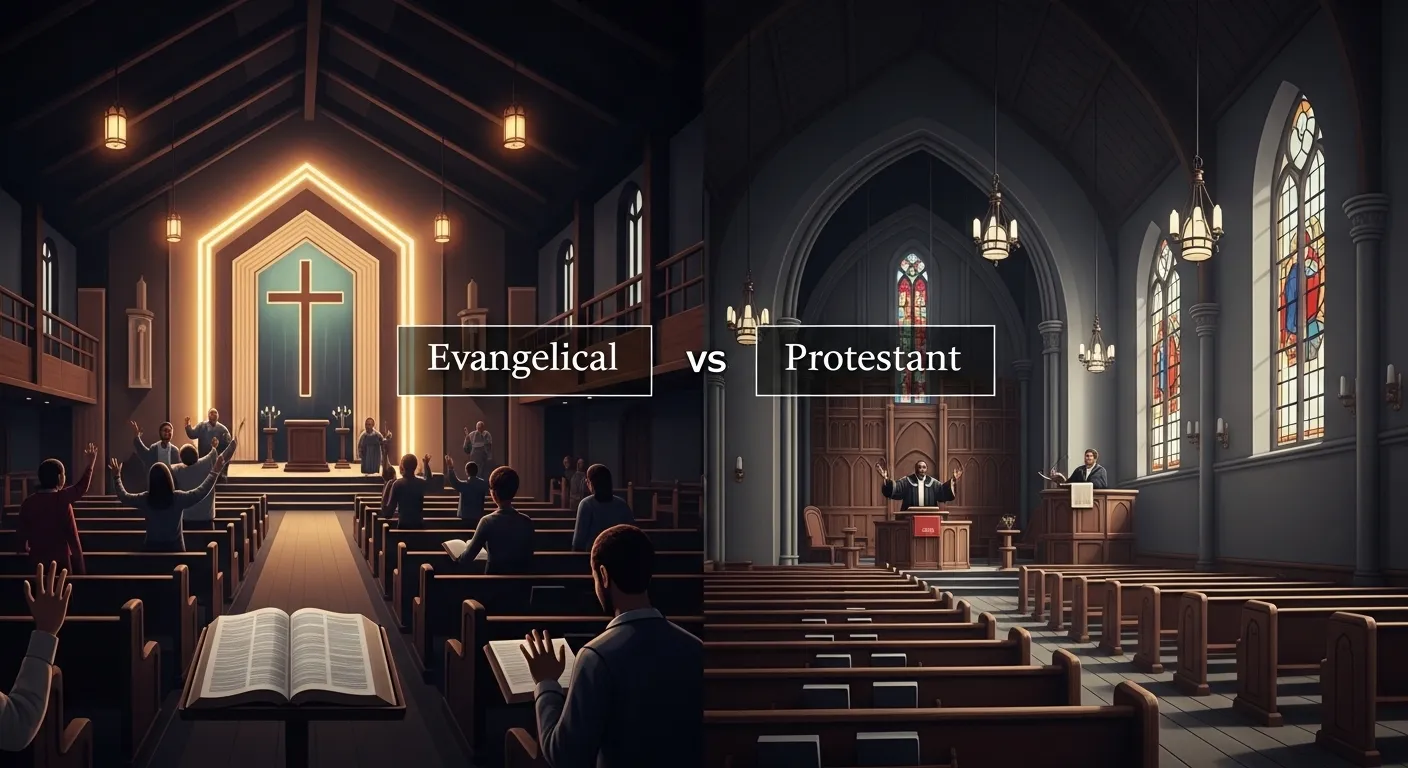
The main difference between evangelical and protestant is this:
- Protestant is a broad category of Christianity that emerged from the Reformation.
- Evangelical is a specific movement within Protestantism that emphasizes personal faith, the authority of the Bible, and spreading the gospel.
Why Is This Difference Important for Learners and Experts?
Understanding the difference between evangelical and protestant is important because these terms influence religious identity, cultural discussions, and even global politics.
For learners, it improves clarity in academic writing and general knowledge. For experts, it helps in analyzing social trends, religious movements, and historical developments. In society, these terms often shape conversations about morality, education, and community values. Misusing them can lead to misunderstandings or incorrect assumptions about beliefs and practices.
Pronunciation (US & UK)
- Evangelical
- US: /ˌiː.vænˈdʒel.ɪ.kəl/
- UK: /ˌiː.vænˈdʒel.ɪ.kəl/
- Protestant
- US: /ˈprɑː.tə.stənt/
- UK: /ˈprɒt.ɪ.stənt/
Linking Hook
Now that you understand the basics, let’s explore the difference between evangelical and protestant in detail through clear, practical comparisons.
Difference Between Protestant and Evangelical
1. Scope
- Protestant: A broad Christian category.
- Example 1: Lutheran churches are Protestant.
- Example 2: Anglican churches are Protestant.
- Evangelical: A subset within Protestantism.
- Example 1: Evangelical Baptist churches.
- Example 2: Evangelical non-denominational groups.
2. Origin
- Protestant: Originated in the 16th-century Reformation.
- Example 1: Break from Catholic Church.
- Example 2: Led by reformers like Martin Luther.
- Evangelical: Developed later as a revival movement.
- Example 1: 18th-century revival movements.
- Example 2: Emphasis on spiritual awakening.
3. Focus of Belief
- Protestant: Varies by denomination.
- Example 1: Some emphasize tradition.
- Example 2: Others focus on liturgy.
- Evangelical: Strong focus on personal faith.
- Example 1: “Born again” experience.
- Example 2: Personal relationship with God.
4. Bible Interpretation
- Protestant: Different interpretations exist.
- Example 1: Symbolic readings.
- Example 2: Liberal theology.
- Evangelical: Strict emphasis on Bible authority.
- Example 1: Literal interpretation.
- Example 2: Bible as ultimate truth.
5. Worship Style
- Protestant: Traditional or modern.
- Example 1: Formal church services.
- Example 2: Structured liturgy.
- Evangelical: Informal and expressive.
- Example 1: Contemporary music.
- Example 2: Interactive sermons.
6. Mission Approach
- Protestant: Mission work varies.
- Example 1: Community service.
- Example 2: Social programs.
- Evangelical: Strong emphasis on evangelism.
- Example 1: Sharing faith actively.
- Example 2: Mission trips.
7. Identity
- Protestant: Religious identity.
- Example 1: “I am Protestant.”
- Example 2: Denominational label.
- Evangelical: Movement or belief style.
- Example 1: “I follow Evangelical teachings.”
- Example 2: Focus on faith approach.
8. Global Presence
- Protestant: Found worldwide.
- Example 1: Europe and America.
- Example 2: Africa and Asia.
- Evangelical: Rapidly growing globally.
- Example 1: Latin America.
- Example 2: Sub-Saharan Africa.
9. Political Influence
- Protestant: Varies widely.
- Example 1: Neutral churches.
- Example 2: Diverse views.
- Evangelical: Often politically active.
- Example 1: Voting blocs.
- Example 2: Social campaigns.
10. Cultural Impact
- Protestant: Broad cultural influence.
- Example 1: Education systems.
- Example 2: Ethics and traditions.
- Evangelical: Strong media and outreach presence.
- Example 1: Religious broadcasting.
- Example 2: Online ministries.
Nature and Behaviour
- Protestant: Diverse, flexible, and varied in beliefs and practices.
- Evangelical: Passionate, mission-driven, and focused on spreading faith.
Why People Are Confused
People often confuse these terms because Evangelicals are part of Protestantism. The overlap makes them seem identical. Media usage also mixes the terms, increasing confusion.
Difference and Similarity
| Feature | Protestant | Evangelical | Similarity |
| Definition | Broad Christian group | Subgroup within Protestantism | Both Christian |
| Origin | Reformation era | Revival movements | Historical roots |
| Beliefs | Varies | Focused and strict | Bible-based |
| Worship | Traditional or modern | Informal and expressive | Church services |
| Mission | Varies | Strong evangelism | Outreach |
Which Is Better in What Situation?
Neither term is “better” because they serve different purposes. Protestant is better when discussing Christianity broadly, such as in academic or historical contexts. It gives a general understanding of religious divisions.
Evangelical is more useful when focusing on specific beliefs or movements within Protestantism. It is ideal in discussions about modern faith practices, personal spirituality, or missionary work.
Metaphors and Similes
- Evangelical: “He spoke like an evangelical, spreading ideas with passion.”
- Protestant: “The group stood like Protestants of change, questioning traditions.”
Connotative Meaning
- Evangelical
- Positive: Passionate, devoted
- Negative: Overly persuasive
- Neutral: Religious movement
- Example: “She is evangelical about her beliefs.”
- Protestant
- Positive: Reformist, independent
- Negative: Divisive (historically)
- Neutral: Religious classification
- Example: “He belongs to a Protestant church.”
Idioms / Proverbs
(No direct idioms exist, but related usage can be created)
- “Preach like an evangelical”
- Example: He preached like an evangelical about healthy living.
- “Protest like a Protestant reformer”
- Example: She protested like a Protestant reformer against injustice.
Works in Literature
- The Protestant Ethic and the Spirit of Capitalism – Sociology, Max Weber, 1905
- Evangelicalism in Modern Britain – History, David Bebbington, 1989
Movies
- The Apostle (1997, USA) – Evangelical themes
- Luther (2003, Germany/USA) – Protestant Reformation
FAQs
1. Are all Evangelicals Protestants?
Yes, Evangelicals are a subgroup within Protestant Christianity.
2. Are all Protestants Evangelicals?
No, many Protestants are not Evangelical.
3. What is the main difference between evangelical and protestant?
Evangelical is a specific movement; Protestant is a broad category.
4. Why do people mix them up?
Because Evangelicals belong to Protestantism.
5. Which term is more common?
Protestant is broader; Evangelical is more specific.
How Both Are Useful for Society
Both groups contribute to education, charity, and community development. Protestants have shaped institutions, while Evangelicals often drive outreach and social engagement.
Final Words for Both
Protestant represents diversity and history. Evangelical represents passion and mission. Both play important roles in shaping modern religious thought.
Conclusion:
The difference between evangelical and protestant lies in scope and focus.
Protestantism is a broad branch of Christianity, while Evangelicalism is a movement within it that emphasizes personal faith and active outreach.
Understanding this distinction helps avoid confusion in conversations, writing, and academic discussions.
If you are a learner or an expert, knowing the difference between evangelical and protestant allows you to communicate more clearly and accurately.

I’m Ethan Walker, dedicated to simplifying English. At wordmatchup.com, I compare commonly confused words with clarity. I help you improve your writing with the right word choices.